Tech · Report Line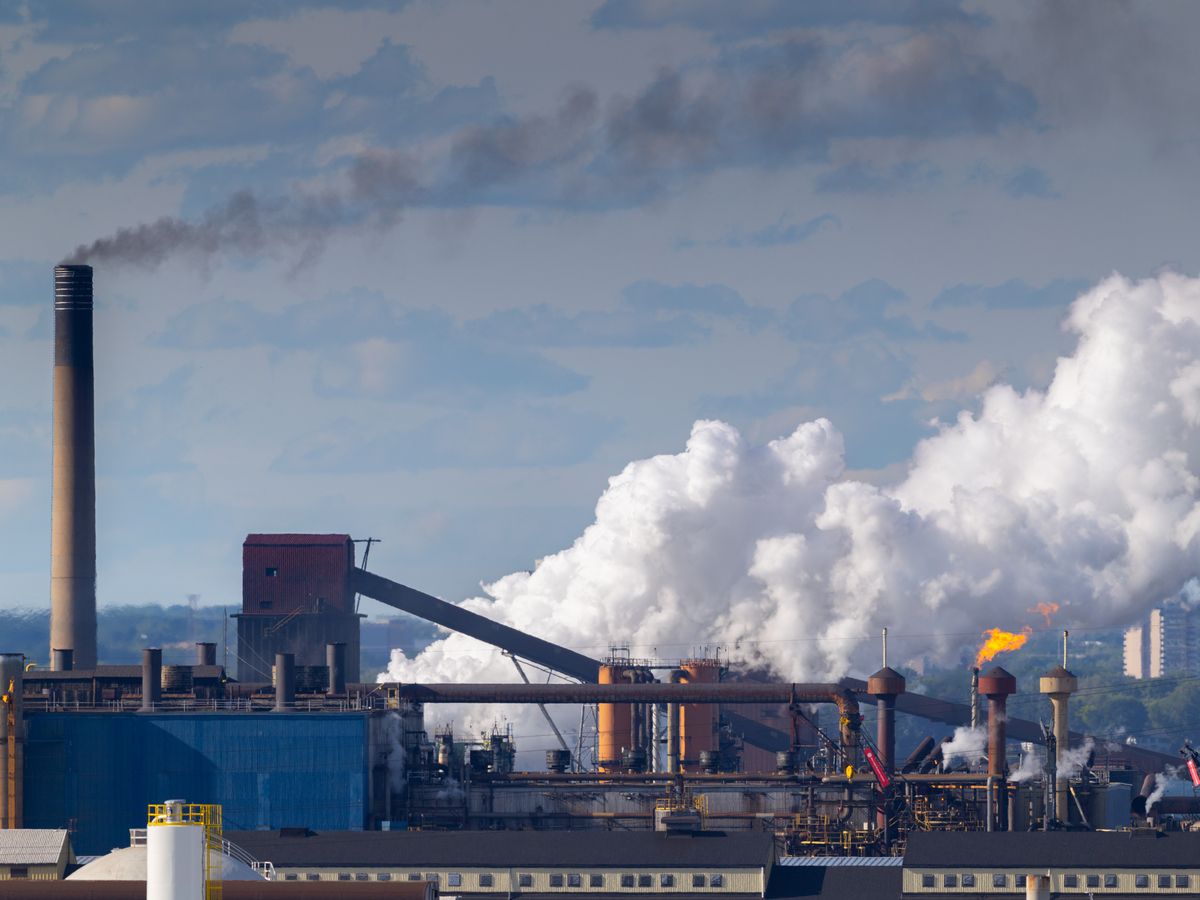
Skip to Content News Archives Economy Energy Oil & Gas Renewables Electric Vehicles Mining Commodities Agriculture Real Estate Mortgages Mortgage Rates Finance Banking Insurance Fintech Cryptocurrency Work Wealth Smart Money Wealth Management Investor Personal Finance Family Finance Retirement Taxes High Net Worth FP Comment Executive Women Puzzmo Newsletters Financial Times Business Essentials More Innovation Information Technology FP500 Podcasts Small Business Lives Told Tails Told Shopping Financial Post Store Obituaries Place a Notice Advertising Advertising With Us Advertising Solutions Postmedia Ad Manager Sponsorship Requests Classifieds Place a Classifieds ad Working Profile Settings My Subscriptions My Offers Newsletters Customer Service FAQ News Economy Energy Mining Real Estate Finance Work Wealth Investor FP Comment Executive Women Puzzmo Newsletters Financial Times Business Essentials Home News Economy Steel plants are crying for steel even though Stelco has just laid off hundreds of workers The U.S.-Canada trade war is aggravating market dynamics in Canada's steel sector The Stelco Holdings Inc. operations in Hamilton, Ont. Photo by Peter Power/Postmedia files Many steel plants across Canada are missing a critical ingredient: steel. Subscribe now to read the latest news in your city and across Canada.
Exclusive articles from Barbara Shecter, Joe O'Connor, Gabriel Friedman, and others. Daily content from Financial Times, the world's leading global business publication. Unlimited online access to read articles from Financial Post, National Post and 15 news sites across Canada with one account.
National Post ePaper, an electronic replica of the print edition to view on any device, share and comment on. Daily puzzles, including the New York Times Crossword. Subscribe now to read the latest news in your city and across Canada.
Exclusive articles from Barbara Shecter, Joe O'Connor, Gabriel Friedman and others. Daily content from Financial Times, the world's leading global business publication. Unlimited online access to read articles from Financial Post, National Post and 15 news sites across Canada with one account.
National Post ePaper, an electronic replica of the print edition to view on any device, share and comment on. Daily puzzles, including the New York Times Crossword. Create an account or sign in to continue with your reading experience.
Access articles from across Canada with one account. Share your thoughts and join the conversation in the comments. Enjoy additional articles per month.
Get email updates from your favourite authors. Create an account or sign in to continue with your reading experience. Access articles from across Canada with one account Share your thoughts and join the conversation in the comments Enjoy additional articles per month Get email updates from your favourite authors Sign In or Create an Account or “There isn’t a buyer of hot-rolled steel that is getting close to what their needs are.
We are all short steel,” Butch Mandel, chief executive of Concord, Ont.-based Welded Tube of Canada Corp., said. Companies such as his can buy steel from one of the three mills in Canada and transform it into products that range from structural beams used in construction, infrastructure and heavy equipment manufacturing to the pipes and casings designed for oil and gas and mineral exploration. Adding a supply problem, rather than a demand problem, to the list of the Canadian steel sector’s woes provides a new twist to the turmoil wracking the sector.
Prime Minister Mark Carney has been trying to shore up the steel sector ever since the United States erected 50 per cent tariffs in 2025 that threw the market into chaos and resulted in widespread layoffs . SUBSCRIBER EXCLUSIVE: FP West: Energy Insider brings you behind the oilpatch’s closed doors with exclusive insights from insiders every Wednesday morning. By signing up you consent to receive the above newsletter from Postmedia Network Inc.
A welcome email is on its way. If you don't see it, please check your junk folder. The next issue of FP West: Energy Insider will soon be in your inbox.
We encountered an issue signing you up. Please try again Earlier this week, Stelco Holdings Inc. , a subsidiary of U.S.-based Cleveland-Cliffs Inc., announced it would indefinitely idle its cold-rolled steel and galvanized operations in Hamilton, which is expected to result in 350 layoffs. Publicly, the company has framed it as a consequence of a demand problem.
Chief executive and chair Lourenco Goncalves, a vocal fan of U.S. President Donald Trump , has previously said Canada is letting too much foreign galvanized steel be “dumped” into the country and that it is “destroying” the market. “Look, we are going to do what’s good for Cliffs and for the Cliffs shareholders,” he said on a conference call in July with analysts.
“If I need to make any changes in the Canadian footprint, it will be all affecting galvanized and producing more hot rolled. That will have a consequence for employment in Canada.” That explanation has not sat well with frontline workers. To obtain federal approval for its $3.4-billion acquisition of Stelco in 2024, Cleveland-Cliffs agreed “to employ at least the same number of unionized employees and the vast majority of non-unionized employees” as before the transaction.
Ron Wells, president of United Steelworkers Local 1005, which represents the workers being laid off, called the layoffs “a betrayal” of its agreement with the government and accused Stelco of abandoning its workers out of expediency. “It’s not like Stelco couldn’t get the orders; they’re walking away, they’re not taking orders,” he said. “It’s just that Stelco could make a greater profit by selling hot-bed products.” Wells said the government should hold Cleveland-Cliffs accountable, including fining the company, for any violations of the agreement and that his union may stage protest rallies if there is not immediate action.
Carney on Tuesday said his government is considering taking legal action. Two executives in the steel industry, who requested anonymity to preserve their relationships with Stelco, said the situation is complicated. On the one hand, they said Cleveland-Cliffs may help alleviate shortages in some plants by increasing its hot-rolled steel production, but they also said the company is exporting steel slabs to the U.S., which has exacerbated the shortages in Canada.
Canadian exports of semi-finished carbon and alloy steel slabs to the U.S. have been rising this year, hitting about 62,000 tonnes in July , up from 3,324 tonnes last year, according to U.S. trade administration data. The data does not indicate which companies are exporting. A spokesperson for Cleveland-Cliffs declined to answer questions on the company’s U.S. exports.
Colin Mang, an assistant professor of economics at McMaster University in Hamilton who studies the steel market, said it would make sense on one level if Cleveland-Cliffs is exporting more to the U.S. “This is why you see a guy like Lourenco Goncalves in support of tariffs,” he said. “It keeps steel prices high in the U.S., which is their main market.
He’s thinking about their portfolio as a whole.” In recent years, both countries have significantly stepped up restrictions on foreign steel imports. In Canada, countries that lack free trade agreements are limited to 20 per cent of the steel volumes they shipped here in 2024, above which a 50 per cent tariff kicks in. Free trade countries can ship 75 per cent of their 2024 volumes before triggering a 50 per cent tariff.
Canada also applied a 25 per cent tariff on a broad swath of products that are largely comprised of steel. The U.S., meanwhile, has invoked national security concerns to impose blanket tariffs that hit steel imports with immediate penalties. Mang said the layoffs in Hamilton and the shift in product mix by Cleveland-Cliffs show the trade war is beginning to have real impacts on the Canadian steel sector, which had become closely integrated with the U.S. during three decades of tariff-free trade.
“The industry is still in a transition period that is likely to continue for several years,” he said. “Undoing 30 years of trade liberalization and specialization is not something that happens overnight. It’s not something that happens in a year or two.” Join the Conversation This website uses cookies to personalize your content (including ads), and allows us to analyze our traffic.
Read more about cookies here . By continuing to use our site, you agree to our Terms of Use and Privacy Policy .
Source: Financial Post