Tech · Report Line
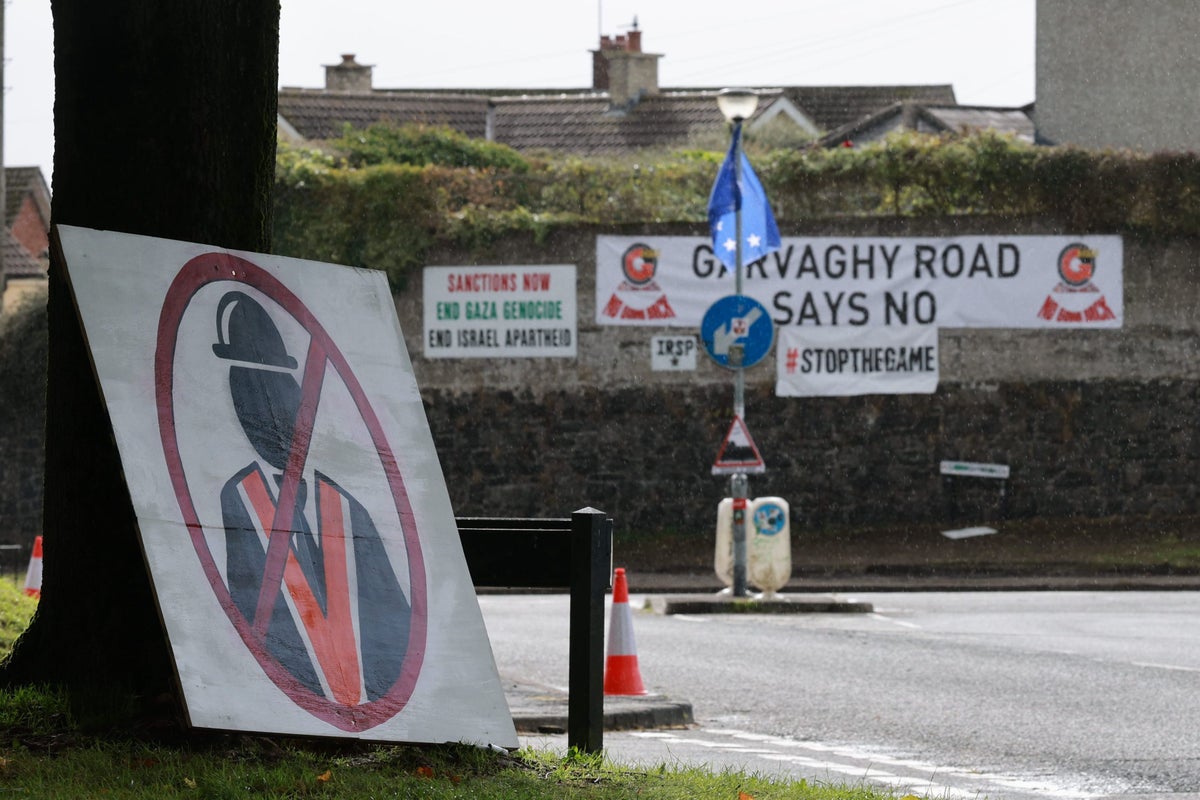
The Secretary of State’s decision to ban the Drumcree Orange Order parade was lawful, a High Court judge has concluded. Sir Chris Bryant stepped in after a tense two-week stand-off in Portadown which followed the Parades Commission giving the green light to the parade completing its traditional route along the mainly nationalist Garvaghy Road for the first time in almost 30 years. The move sparked large crowds to gather on the road in opposition to the parade returning to the former flashpoint that sparked serious disorder and violence in the 1990s.
Orangemen make their way from Drumcree Church as police form a barricade to prevent them entering the Garvaghy Road. (PA) (PA Wire) Police assessed officers were unable to safely escort the parade along the Garvaghy Road while the crowds remained. Orangemen stayed on Drumcree Hill and made a number of attempts to complete the parade by approaching the police line and making their case for almost two weeks. Sir Chris stepped in to ban the parade on October 9 after hosting talks with the two sides and being unable to find an agreed resolution.
In the latest in a series of legal challenges around the dispute, a judicial review was sought by a member of the institution to the intervention by Sir Chris, as well as the role of PSNI Chief Constable Jon Boutcher. Last week at Belfast High Court, Mr Justice Scoffield heard a challenge to the “legality of the decision-making route” to ban the parade. However, counsel for Sir Chris countered he could have taken “no other decision” than halting the Drumcree march.
The court also heard PSNI intelligence that dissidents may have mounted gun attacks on the police had officers cleared a path for the parade. On Wednesday morning, Mr Justice Scoffield found the decision by Sir Chris was lawful. “The Secretary of State’s decision was lawful and within the margin of discretion properly afforded to him, although it was highly regrettable it was required in the circumstances in which it arose,” he said.
Mr Justice Scoffield went on to say those opposed to the parade “should take no particular joy in the outcome of this case”. He added: “The Secretary of State’s decision was lawful but the position which has now been reached has been brought about at very significant cost to the people of Northern Ireland, financially, through the diversion of police resources and in terms of community relations. “Depressingly the threat of serious and widespread disorder has loomed large in the matters under consideration.” Mr Justice Scoffield also referred to the ongoing police investigation into alleged breaches of the Parades Commission determination.
Northern Ireland Secretary Sir Chris Bryant stepped in after a tense two-week stand-off in Portadown (PA) (PA Wire) First Minister Michelle O’Neill is among a host of Sinn Féin and People Before Profit representatives who have attended voluntary interviews with police in that probe. The judge highlighted that Article 11 of the European Convention on Human Rights protects the right to freedom of peaceful assembly. “Whatever one’s standing or strength of conviction, the law does not apply only when you agree with it or with the outcome of a particular legal process.
That is one thing which the court is both entitled and in my view duty-bound to point out in the circumstances of this case,” he said. “It is a lesson for those on all sides of the debate in our society which at least for some remains deeply divided along traditional fault lines, such divisions enhance rather than undermine the need for respect both for the rule of law and for the decisions of the legal mechanisms established in our democracy to resolve deep-seated disputes.” He finished: “I refuse the substantive application for judicial review, the applicant’s claim therefore is dismissed.” An appeal is expected to be lodged against the decision. Speaking outside court, loyalist activist and legal adviser to the Portadown district of the Orange Order Jamie Bryson insisted the organisation “will walk the Garvaghy Road”.
“What has been established in court today can be summarised very simply: the Portadown district established a legal right to walk the Garvaghy Road,” he said. He added: “Whatever about the legalities of this decision, we will study it carefully. Counsel has already made clear in court we will, in all likelihood, be lodging an appeal, but the most important thing to come out of this judgment – and I urge everybody to read it – is the concluding remarks of Mr Justice Scoffield, and particularly those who want to sustain the people referred to in this judgment in office, go and read this today.
“The Portadown district will set out their next approach in the coming days, but let me be very clear about one thing, which that approach will include: the Portadown district will walk the Garvaghy Road. “They will exercise their legal entitlement and they will do so sooner rather than later.” Breandán Mac Cionnaith, a spokesman for the Garvaghy Road residents, told reporters outside the High Court: “The position of the community of the Garvaghy Road, the men, women and kids who live there, has been fully vindicated today. “The position we took in relation to this Orange march was fully justified.
All we sought was the right that was promised under the Good Friday Agreement, the right to live free from sectarian harassment. That right has been vindicated and upheld today.” Breandan Mac Cionnaith (also known as Brendan McKenna) from the Garvaghy Road Residents Coalition, said they are “fully vindicated” following the High Court ruling. (PA Wire) Sinn Féin councillor for Craigavon Catherine Nelson said the community “can now live in peace again”. She added: “Residents are to be commended, but also residents are traumatised.
“They still bear the scars of what went on on that road in the 90s. Many of them have not slept in recent weeks due to the trauma that has been put on them by this decision to force this unwanted march through their community. “So what we now need to do is support residents, help residents recover, and work with them, because none of this is of their doing.” Darragh Mackin, solicitor at Phoenix Law, said “no amount of spin will change the legal reality” of the ruling.
“We must look at this in context, the context is 21 people were killed as a result of this parade,” he said. “There is no European Court of Human Rights authority, there is no domestic authority that points to the context of this parade because it is unrivalled in human rights history.”
Source: The Independent