Tech · Report Line
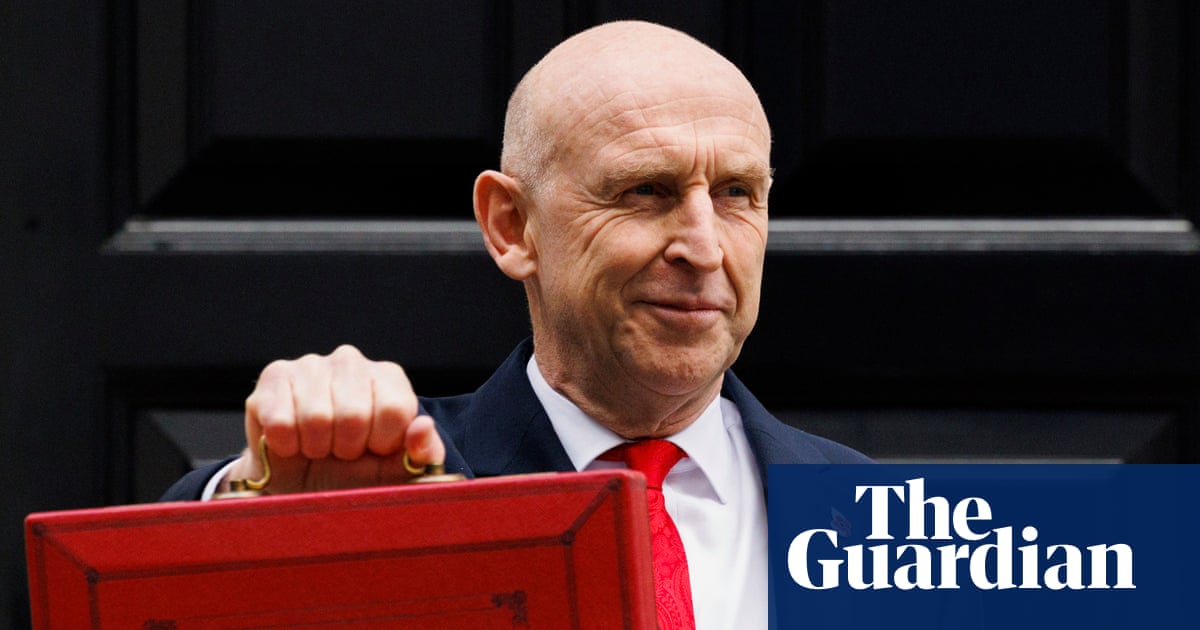
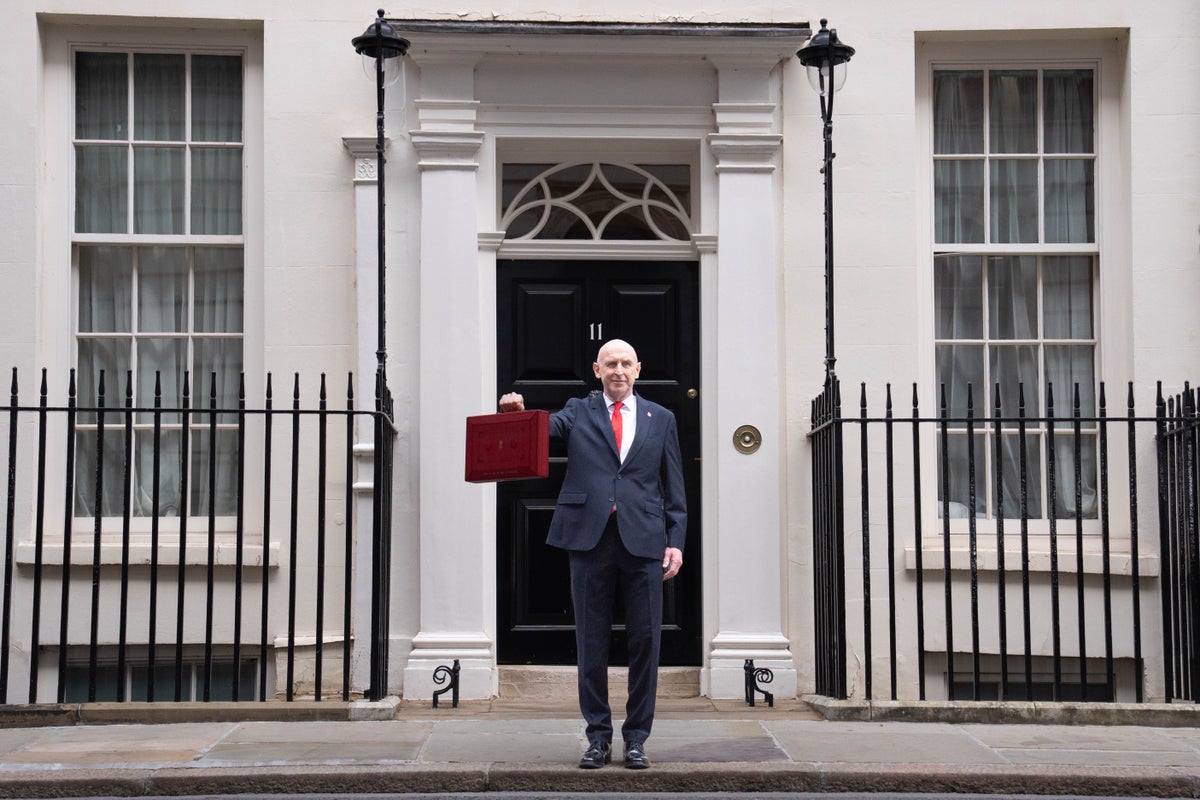
Good morning. As chancellor John Healey delivered the first budget of the Burnham government yesterday afternoon, the now-familiar phrasings were all in there: “breathing space” for households, “growth in every postcode,” and setting the foundations for a “radical rewiring of the state.” But political ambition met economic reality, as the chancellor hammered home the scale of damage inflicted on the public finances by the war in the Middle East. Just over 100 days into Andy Burnham’s premiership, this was not the all-guns-blazing transformative change of a government that styled itself as the most radical since Margaret Thatcher, but a confetti of micro-measures in a budget so quiet it at times barely whispered.
Which is just what the City ordered, rewarding Burnham and Healey with a day of falling bond yields. But was this really the first step in kicking 40 years of neoliberalism into touch? This morning I’ll take you through the key takeaways, and address the one question nobody else dares to: if this budget was a New Order track, would it be more Regret than True Faith ?
But first, the headlines. Five big stories Spain | Spain has begun three days of mourning after a high-speed rail collision – its second this year – killed 68 people and injured scores, with relatives desperately seeking news about their loved ones. US midterms | Barack Obama, speaking at a campaign rally in suburban Atlanta, offered a closing argument for Democrats in the final week of the midterm election campaign.
UK news | Tommy Robinson faces up to 10 years in prison after being found guilty of harassing two journalists to the point it caused them fear of violence. Israel | Israel’s future hangs in the balance after it became clear that Benjamin Netanyahu had lost his governing majority . His political fate now depends on whether opposition Jewish parties are prepared to forge a common front with Palestinian parties, whose support surged in Tuesday’s elections.
Media | Two news organisations have a duty to the public and their sources to publish allegations of exploitative sexual behaviour by a well-known figure despite claims he is “highly likely” to attempt suicide, the high court has heard. In depth: A budget shaped by war and rising borrowing costs The chancellor announced a series of measures to cut energy costs, including extending the VAT cut. Photograph: Alamy/PA Compare John Healey’s comms with the pre-budget media blitz of previous chancellor Rachel Reeves (which resulted in a gripping row about productivity forecasts, requiring everyone to pretend they understood what fiscal headroom was).
The run-up to this year’s budget was – to the entertaining chagrin of some Westminster commentators – leak-free, with the precision-controlled release of ‘everyday fixes’, such as removing tariffs from 100 food items, from baked beans to boiled sweets – a move promptly dismissed as gherkinomics by the shadow chancellor, Andrew Griffith. But was this controlled media strategy simply because there wasn’t... that much to leak? To keep the Treasury’s deficit reduction plans on track in the face of rising government borrowing costs, Healey leaned into incremental change, rather than radical transformation, as he warned the Commons that the country was facing not light fiscal headwinds but “global economic storms”.
Indeed, after Healey finished speaking, the government’s independent forecaster, the Office for Budget Responsibility, issued a sharp downgrade to its growth forecast for 2027, warning British households face a “pretty grim picture” for living standards as Trump’s open-ended war on Iran triggers a fresh cost of living crisis. He nonetheless promised a series of fixes to help with the cost of living, including the one measure that could plausibly be described as the proverbial hat-exiting rabbit, a new £100 energy payment for millions of households. But more difficult decisions were delayed until next year’s spending review.
What were the key takeaways? In his 56-minute speech, Healey’s major announcements included plans to: * Give 20m households in council tax bands A to D in England a £100 household energy payment this winter, with equivalent funding for Scotland, Wales and Northern Ireland (immediately after the announcement, Andrew Sparrow over on our politics live blog discovered that gov.uk’s council tax band checker had glitched under the strain.) * Extend the VAT cut on electricity until July 2027, which Healey says will take £50 off the annual price cap. * Abolish standing charges , a fixed daily fee on top of usage, on gas bills – this should save two-thirds of us an average of £45 a year, and is likely to help poorer households, which use less gas, so the standing charge makes up a bigger proportion of their bill. * Extend the 5p fuel duty cut to July 2027. * Introduce a new Pension Tax Allowance for lower income pensioners that means they won’t be taxed on any of their state pension. * Abolish the controversial cliff-edge rule for carers’ allowance, a scandal exposed by the Guardian last year that has plunged hundreds of thousands of unpaid carers into life-changing debt. * Ditch plans to slash the annual cash Isa allowance , overturning the decision by his predecessor, Rachel Reeves, to cut the amount you can save in tax-free accounts from £20,000 to £12,000 a year. * Help for the high street: small business rate relief raised from £12,000 to £18,000 * Extra economic and military support for Ukraine worth £10bn based on loans and export finance guarantees, Healey said President Zelensky had told him “you’ve made my day” when he shared the details ahead of the budget speech. How is he paying for it?
Sticking with Labour’s pledge not to increase income tax, VAT or national insurance, Healey raised the surcharge banks pay on their profits from 3% to 6% for the next 15 months. He said this would pay for immediate support with energy bills, but campaigners and organisations like the TUC, which has been pushing for a much higher surcharge, will probably be disappointed he didn’t go further for longer. He said the support package would also be paid for by an unexpected two percentage-point income tax rise for landlords and non-Isa savers.
Healey also raised taxes on higher stakes gambling machines by 5% to 25%, and excluded adult games centres as well as vape shops from business rates relief. Other measures include a clampdown on online sellers like Amazon, eBay and Temu avoiding VAT on their platforms, and stronger compliance powers for HMRC to collect overdue tax. What did Healey leave out? * The National Minimum Wage is to rise by 3.9%, but Healey faces fierce criticism for not fulfilling the manifesto pledge to equalise the lower minimum wage paid to people under 21 with the rate for older workers. * Healey rejected calls by senior Labour MPs to raise capital gains tax to the same levels as income tax after influential figures, including the former Treasury minister Jim O’Neill, warned it would harm incentives for “wealth creators”. * The chancellor was reported to be considering lowering the threshold for Reeves’s mansion tax from £2m to £1.5m, but London MPs pushed back. * Although government departments are facing real-term cuts , Healey made no mention of topping up their cash budgets.
Paul Johnson, former director of the Institute for Fiscal Studies, suggested the real story of the budget was Labour kicking the can down the road . What was the reaction? “We know who we are, we know where we’re going, we can see the Britain we want to be,” Healey concluded with a flourish, before sitting down for a big hug with Andy.
But did his budget bring British voters any closer to knowing what the Burnham government stands for? Responding to Healey’s speech, Tory leader Kemi Badenoch said that most people listening would think “is that it?” And this question was being posed by critical friends of Labour too. The chancellor was careful to acknowledge the staging posts to come – substantial reports from Alan Milburn and Stephen Timms, on Neets and Pip respectively, will be published next month and offer more detail on proposed changes to welfare spending.
The spending review next spring will set out plans to meet Nato commitments on defence. But in the interim, did Healey offer enough? As Andrew Sparrow pointed out, perhaps sensitive to the charge that there is not much radicalism to see here, both Healey and Burnham are presenting the changes to gas standing charges as the start of an ambitious reform of “our broken energy market” – while accepting that “won’t happen overnight”.
Government ministers talking up the budget in the evening media rounds also pointed to the section of the budget detailing Healey’s “roadmap for fiscal devolution” as further evidence of the vision thing. Our early analysis suggests he is at least speaking people’s language. The £100 energy payment targets the struggling middle as well as poorer households, help for local high streets will be popular – while he successfully avoided measures that might anger vocal vested interests (looking at you, Farmer Hoggett).
The public is unlikely to shed a tear for gambling bosses or banks. “Nonetheless it comes with risks,” says our political correspondent Peter Walker, “particularly if the smattering of cost of living measures are not properly noticed by voters.” skip past newsletter promotion after newsletter promotion Meanwhile, our Opinion panel offers mixed reactions. Rohan Sathyamoorthy points out the “outrageous” absence of real help for young people, nor any mention of the student loan crisis.
While Polly Toynbee suggests we hold our nerve, and hope, the chancellor did well to choose popular targets and tell the truth about the state we’re in. And yet again, there’s that awkward question about boldness, and where it’s got to. As my First Edition colleague Hettie puts it so well in the panel: “Small, short-term fixes and making it easier to cancel your Netflix subscription don’t equate to a political philosophy, let alone a programme capable of convincing voters that difficult trade-offs – whether on defence spending or the costs of an ageing society – will be worth it.” What else we’ve been reading ‘I got a bee buzzing in my ear and had to walk away until she let up’ ...
US photographer Holly Lynton’s Bare Handed Les, Honeybees. Photograph: Holly Lynton I had to double take when looking at this week’s My Best Shot : the story behind Holly Lynton’s picture of a bare-handed beekeeper. Rather him than me ...
Michael At a time when the biggest headlines in football centre on corruption and fraud, Barney Ronay’s column perfectly summarised why Harry Kane winning the Ballon d’Or made so many football fans feel genuine joy. Dipo Faloyin, newsletters team The New York Times has a fascinating report (£) on a secret plan, hatched up by Alaska Democrats, to pull support from a Republican candidate with sneakiest of tactics. Michael There is much to admire in Kate Hutchinson’s fascinating and wide-ranging interview with Peven Everett , who has spent the past two years battling stage four cancer.
Dipo Faloyin, newsletters team I really appreciated Dahlia Scheindlin’s early analysis of the Israeli election results, even if the outcome itself is utterly depressing. Michael Sport Wesley Fofana lifts his penalty over the bar and Liverpool go through. Photograph: Darren Staples/AFP/Getty Images Football | Liverpool won penalty shootout in which there were five failed kicks 6-5 after a 1-1 draw with Chelsea in the Carabao Cup at Anfield.
Prem Rugby | Prem Rugby and the Rugby Football Union have stated they are committed to expanding the top flight with English clubs in response to a report claiming that two Welsh sides could soon join the competition. Cricket | Carey and Inglis counterpunch to put Australia on top in South Africa, to reach 330 for four at the close. The front pages Photograph: The Guardian “£100 handout – but Healey warns of ‘global storms’”, is the Guardian ’s front page today.
The budget dominates the papers, with the Telegraph writing “Healey puts squeeze on savers”, the Express has “Really, is that it, Mr Healey?”, the FT splashes “Healey hits savers in modest Budget”, while the Mirror ’s take is “For the many not the few”. The i Paper goes with “Chancellor hands £100 to millions for energy bills – but delays welfare reform and cuts”, the Times says “Healey offers cold comfort” and the Mail ’s headline is “This had all the cha-cha-cha of siesta hour in a Mexican border town. Hombre Healey is a snoozer!”.
Metro leads on “A £100 trick or treat?” and the Sun rates what won in the budget with “Shirkin’ workin’ gherkin”. The Latest Photograph: The Guardian Burnham’s first budget: will it help with the cost of living? In his first budget as chancellor, John Healey has pledged to offer ‘breathing space’ to help Britons navigate ‘global economic storms’.
There were a record number of measures, including a one-off £100 energy payment to millions and a rise in the levy on bank profits. But the Conservatives have criticised the government for postponing big decisions, including on defence and welfare. Lucy Hough speaks to economics editor Heather Stewart.
Cartoon of the day | Ben Jennings Illustration: Ben Jennings/The Guardian The Upside A bit of good news to remind you that the world’s not all bad Jaspal Sharma, 48, from Hindu priest community donated a piece of his agricultural land for the construction of a Mosque in his village. Photograph: Cheena Kapoor Bibi Rajinder Kaur, a 77-year-old Sikh woman, persuaded her grandson to donate some of his farmland to build a mosque. She did so, she says, because Muslims were the only faith in her Punjab village that did not have a place to gather.
Kaur isn’t alone in her generosity. Over the past decade, several rural Sikh and Hindu communities have worked to help restore the hundreds of mosques that were destroyed during the sectarian violence of British India’s partition in 1947. The effort has brought Muslims, Sikhs and Hindus together in this part of northern India.
“There is no deed better than giving someone a place to worship,” Kaur says. Sign up here for a weekly roundup of The Upside, sent to you every Sunday Bored at work? And finally, the Guardian’s puzzles are here to keep you entertained throughout the day.
Until tomorrow. Quick crossword Cryptic crossword Wordiply
Source: The Guardian